


 Tel:+86 187-6464-2379

TEL:+86 0536-6162866+86 187-6464-2379
ADD:No.19, Shunde Road, Zhucheng City, Shandong, China
WEB:m.mpwfn.cn
Chemical sewage treatment plant

-
MS:Katherine Wong
+86 187-6464-2379
-
TEL:+86 0536 6162866
MAIL:sales@cntianlang.com
-

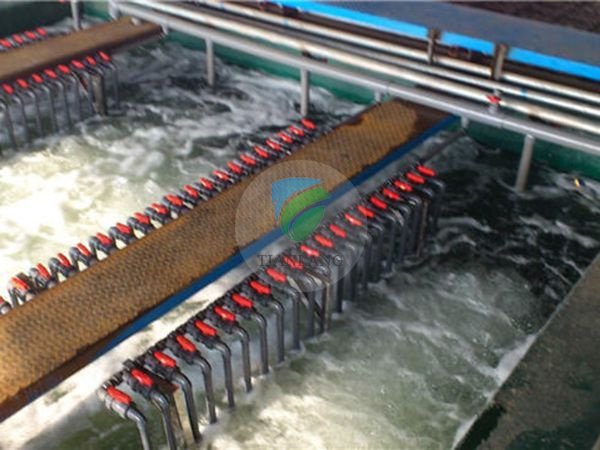
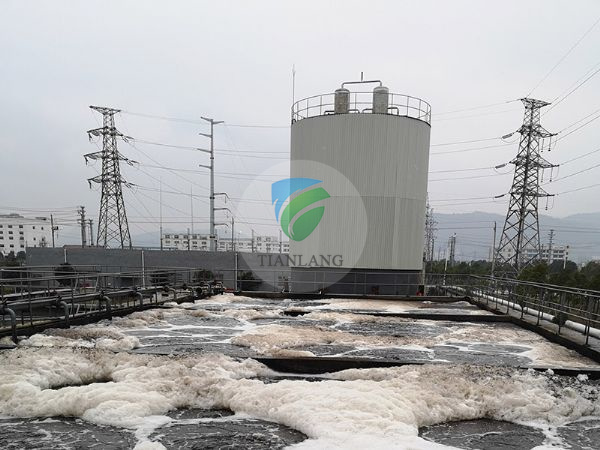
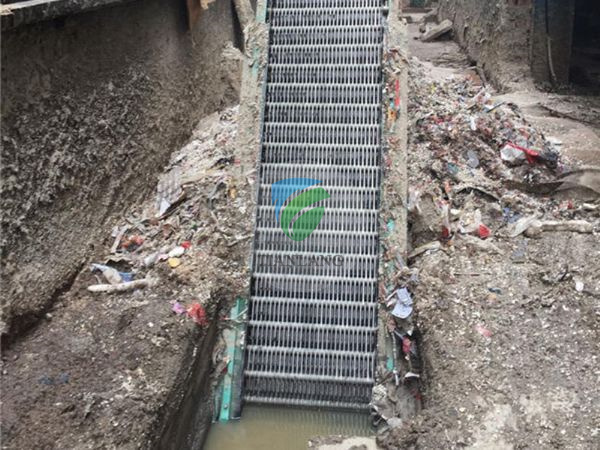
Name: Chemical sewage treatment plant
details
Note: The following are just a few common treatment methods. The specific processing method needs to be customized for you in combination with your situation. If you need detailed plans and quotations, please call our company service hotline, we have a dedicated technical staff to give you free programs and quotations.
According to the water quality analysis table, according to the wastewater source, high-concentration chemical wastewater, high-salt chemical wastewater, PTA residue wastewater, easily degradable chemical wastewater and etching liquid chemical wastewater can be used, among which high-concentration chemical wastewater, high-salt chemical wastewater and PTA residue wastewater It contains organic substances that are difficult to be biodegraded by organisms and some substances that are harmful to biochemistry. Therefore, we intend to classify and treat the above various wastewaters.
Recommended treatment of chemical wastewater:
1. Catalytic microelectrolysis treatment technology
Micro-electrolysis technology is an ideal process for the treatment of high-concentration organic wastewater. The process for high-salt, difficult-to-degrade, high-color wastewater treatment can not only greatly reduce COD and color, but also greatly improve wastewater. Biochemical. The technology is to treat the wastewater by using a micro-electrolytic filler filled in the micro-electrolysis device to generate a "primary battery" effect without being energized. When the water is passed, a number of "primary batteries" with a potential difference of 1.2V are formed in the device. The "primary battery" uses waste water as an electrolyte to form an electric current through discharge to electrolytically oxidize and reduce the wastewater to achieve the purpose of degrading organic pollutants. The new ecology [·OH], [H], [O], Fe2+, Fe3+, etc. produced during the process can undergo redox reactions with many components in the wastewater, such as coloring of colored substances in colored wastewater. The group or the color-assisting group, even the chain-breaking, achieves the effect of degradation and decolorization; the formed Fe2+ is further oxidized to Fe3+, and their hydrates have strong adsorption-flocculation activity, especially after the alkali is adjusted to pH value. Ferric hydroxide and ferric hydroxide colloidal flocculant, their flocculation ability is much higher than that of iron hydroxide colloid obtained by hydrolysis of general agents, which can flocculate large amounts of fine particles, metal particles and organic macromolecules dispersed in water. Based on the combined effects of electrochemistry, oxidation-reduction, physics, and flocculation precipitation. The process has the advantages of wide application range, good treatment effect, low cost, short processing time, convenient operation and maintenance, low power consumption, etc., and can be widely applied to pretreatment and deep treatment of industrial wastewater.
[Technical Features]
(1) The reaction rate is fast, and general industrial wastewater takes only half an hour to several hours;
(2) A wide range of organic pollutants, such as: difficult to remove organic matter containing fluoro, carbon double bonds, nitro, halogenated structures, etc. have a good degradation effect;
(3) Simple process flow, long service life, low investment cost, convenient operation and maintenance, low operating cost and stable treatment effect. Only a small amount of micro-electrolytic filler is consumed during the treatment. Fillers need only be added regularly without replacement, and can be directly put into the addition.
(4) After the micro-electrolysis treatment, the waste water will form the original ferrous or iron ions in the water, which has better coagulation effect than the ordinary coagulant. It does not need to add coagulant such as iron salt, and the COD removal rate is high. And will not cause secondary pollution to water;
(5) It has good coagulation effect, high chroma and COD removal rate, and the same amount can greatly improve the biodegradability of wastewater.
(6) The method can achieve the effect of chemical precipitation and phosphorus removal, and can also remove heavy metals by reduction;
(7) For the high-concentration organic wastewater treatment project that has not been completed, this technology can be used as the pretreatment of the wastewater from the construction project to ensure stable discharge of the wastewater after treatment. It is also possible to separately extract part of the wastewater with a higher concentration in the production wastewater for micro-electrolysis treatment.
(8) Each unit of the technology can be used as a separate treatment method, and can also be used as a pretreatment process for biological treatment, which is beneficial to sludge sedimentation and biofilming.
[Application]
(1) dye, chemical, pharmaceutical wastewater; coking, petroleum wastewater;
The BOD/COD value after the above wastewater treatment water is greatly improved.
(2). Printing and dyeing wastewater; leather wastewater; papermaking wastewater, wood processing wastewater;
It has a good application for decolorization and effective removal of COD and ammonia nitrogen.
(3). Electroplating wastewater; printing wastewater; mining wastewater; other wastewater containing heavy metals;
Heavy metals can be removed from the above wastewater.
(4). Organic phosphorus agricultural wastewater; organic chlorine agricultural wastewater;
Greatly improve the biodegradability of the above wastewater, and can remove phosphorus, remove sulfide
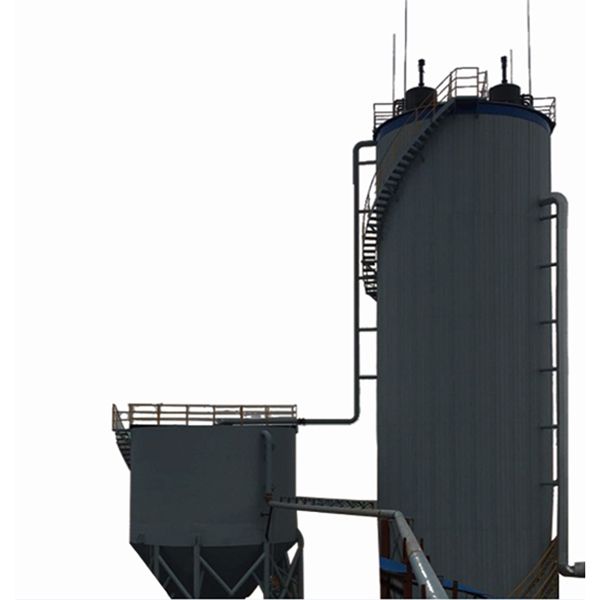
2. Anaerobic internal circulation reactor (IC)
Internal Circulation (IC) is an anaerobic water treatment process developed by PAQUES in the Netherlands in the mid-1980s.
The IC reactor is a new reactor based on the concept of UASB reactor granulation and three-phase separator, which can be seen as the overlap of the units of the two UASB reactors. It is characterized by the separation of biogas into two stages in a high reactor. The bottom is at an extreme high load and the upper one is at a low load.
The structure of the IC reactor is characterized by a large aspect ratio, generally 4-8, and a height of 16-25m. From the outside, it looks like an anaerobic 1-influent 2-gas hood 3-biogas Lift tube 4-gas liquid separator biochemical reaction tower. The IC reactor is functionally composed of four distinct functional parts, namely a mixing section, an expanded bed section, a finishing section and a reflux section.
The advantages of the IC reactor are mainly as follows:
[1] The volumetric load rate is high and the hydraulic retention time is short.
[2] The capital construction investment province has a small footprint. Due to the high volumetric loading rate of the IC reactor, the volume of the wastewater treated with the same total COD is only about 30-50% of that of the conventional UASB reactor, which reduces the capital investment. At the same time, because the IC reactor has a large aspect ratio, it has a special footprint and is very suitable for some factories and mines with tight floor space.
[3] Save energy. Since the IC reactor uses the biogas generated by itself as the lifting power to realize the internal circulation of the mixed liquid, it is not necessary to provide a separate pump to realize the forced circulation, thereby saving energy consumption.
[4] Strong anti-impact load capacity. Since the IC reactor realizes the internal circulation, the internal circulating fluid and the influent water are thoroughly mixed in a reaction chamber, so that the harmful substances in the raw wastewater are sufficiently diluted, thereby greatly reducing the degree of harmfulness, thereby improving the reactor's ability to withstand impact load. .
[5] Ability to buffer pH changes. The IC reactor can fully utilize the alkalinity of the circulating reflux, buffer the pH, and stabilize the pH in the reactor, thereby saving the amount of alkali in the water and reducing the running cost.
[6] The effluent water quality is stable. The IC reactor is equivalent to two-stage UASB art processing. The following one has a high organic load rate and acts as a “coarse” treatment. The above organic loading rate is low and acts as a “fine” treatment, so it is more stable than the general single-stage treatment. Well, the effluent water quality is stable.



 Send Email
 0536 6162866
 18764642379
 Tel
Tel Home
Home Products